
Roots travel
Coming back to Benin.
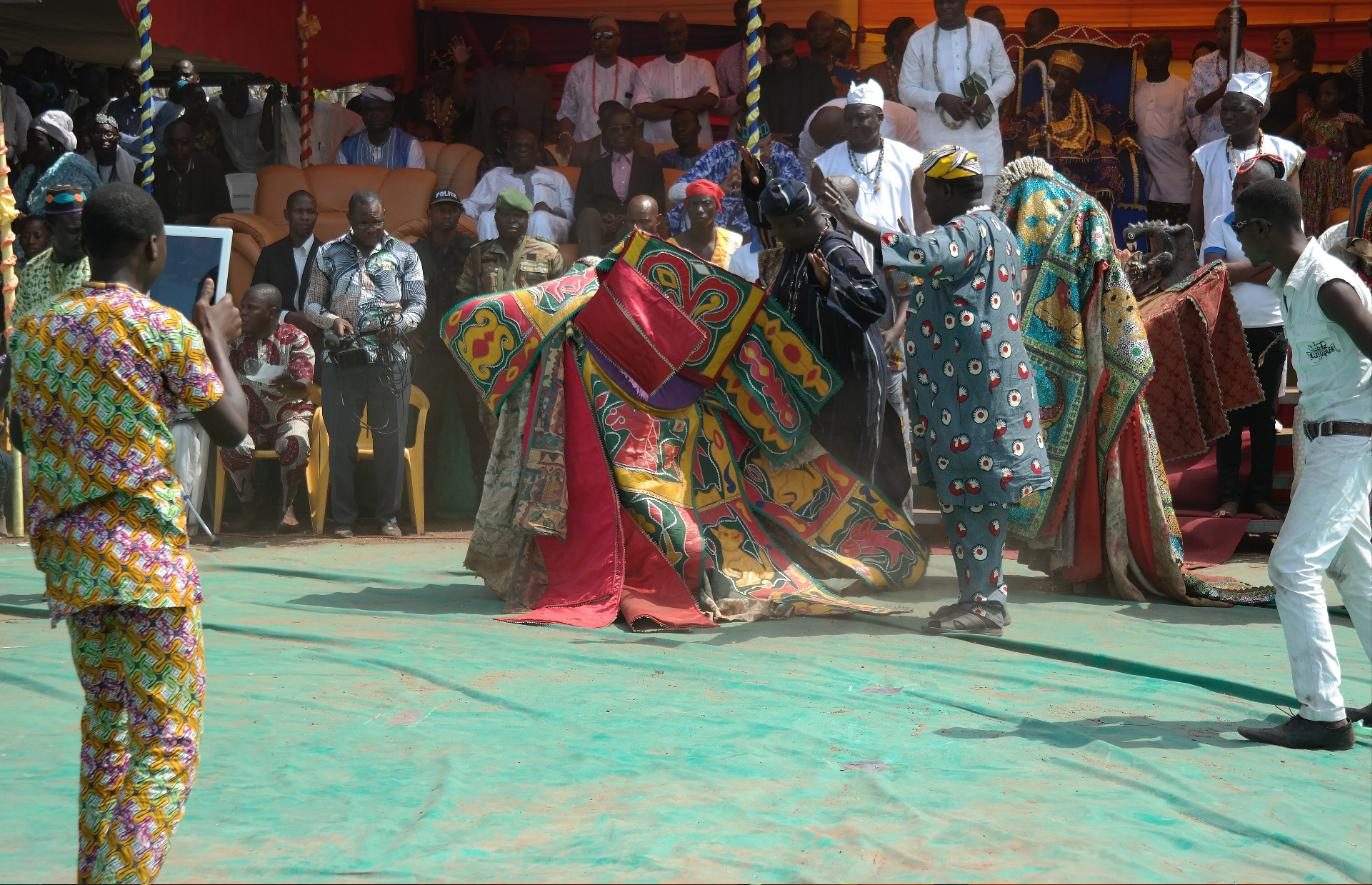
Ouidah is the port the ships left from. Two centuries later, Benin has turned that return into state policy — and into a week in January when the town does not sleep.
What Benin has put in place
Since law 2024-31 of 2 September 2024, amended in July 2025, any adult who establishes through their genealogy that they descend from a sub-Saharan African ancestor deported from the continent during the transatlantic slave trade may be recognised as a Beninese national. Applications are filed online, on the government's official platform, myafroorigins.bj.
The country has also appointed ambassadors for Afro-descendants — the film-maker Spike Lee for the United States, in July 2025 — and begun a considerable memorial programme: an international museum of memory and slavery at Ouidah, a museum of the epic of the Amazons and the kingdom of Danhomè at Abomey, an international vodun museum at Porto-Novo. These museums are announced and under construction; the opening dates are the government's to publish, not ours.
Léna Escapes handles no citizenship file, represents nobody and takes nothing on these procedures. We house, we drive, and we know the country. For the process itself, go to the official platform and the Beninese authorities.
What there is to see, today
Ouidah
The sacred forest of Kpassè, the Temple of Pythons, the history museum in the old Portuguese fort, and the four kilometres of the Slave Route down to the Door of No Return. Forty minutes from Cotonou.
Abomey
The royal palaces of Dahomey, on the UNESCO World Heritage list since 1985, and a museum that tells the kingdom's story plainly, the slave trade included. A hundred and thirty-three kilometres.
Porto-Novo
The Aguda quarters, built by the families who returned from Brazil in the nineteenth century: verandah houses, Portuguese names, and a grand mosque that was once a baroque church. Thirty-five kilometres.
Ganvié
The village built on stilts in Lake Nokoué by the Tofinu, precisely to escape the raids: the warriors could not enter the water. Half a day.
What we do for this journey
- A home in Cotonou, one base for the whole stay
- A driver and a guide on site at Ouidah, Abomey and Porto-Novo
- An airport welcome, whatever time the flight lands
- A concierge in French and English, around the clock
- Fortnightly and monthly rates for long stays
- A quote before, an invoice after, in your name
Where you come from
Where to stay


Common questions
- Le Bénin accorde-t-il la nationalité aux afro-descendants ?
- Oui. La loi n° 2024-31 du 2 septembre 2024, modifiée par la loi 2025-11 du 1er juillet 2025, reconnaît la nationalité béninoise à toute personne majeure qui établit par sa généalogie qu'elle descend d'un ancêtre d'Afrique subsaharienne déporté hors du continent pendant la traite transatlantique. La demande se dépose sur la plateforme officielle du gouvernement, myafroorigins.bj.
- Quels documents faut-il fournir ?
- La plateforme officielle demande une preuve d'ascendance afro-descendante, un extrait de casier judiciaire, une pièce d'identité, un justificatif professionnel et un justificatif de résidence. Léna Escapes ne traite aucun dossier et ne représente personne : renseignez-vous auprès de la plateforme et des autorités béninoises.
- Que voir quand on vient chercher ses racines au Bénin ?
- Ouidah d'abord : la forêt sacrée de Kpassè, le Temple des Pythons, le musée d'histoire dans l'ancien fort portugais, puis les quatre kilomètres de la Route des Esclaves jusqu'à la Porte du Non-Retour, sur le sable. Ensuite Abomey et les palais royaux du Dahomey, inscrits au patrimoine mondial de l'UNESCO depuis 1985. Porto-Novo pour les quartiers agudas, bâtis par les familles revenues du Brésil. Et Ganvié, le village lacustre fondé pour échapper aux razzias.
- Combien de jours faut-il ?
- Cinq jours au minimum depuis Cotonou : une journée à Ouidah, une à Abomey, une demi-journée à Ganvié, une à Porto-Novo, et du temps pour souffler. Beaucoup de voyageurs restent deux à trois semaines, et c'est là que le tarif à la quinzaine prend tout son sens.
- Quand est-ce le plus fort ?
- Au début du mois de janvier. Le 10 janvier est la fête nationale des religions traditionnelles, jour férié dans tout le pays, et Ouidah accueille les Vodun Days. C'est la semaine la plus intense de l'année — et la plus difficile à loger : réservez six à huit semaines avant.
Photograph : Ahya Atindéhou · Wikimedia Commons · CC BY-SA 4.0
We plan the journey with you
Tell us where you are coming from, how many you are and over how many days. We come back with a home, a price and an itinerary.
+229 01 67 60 80 60